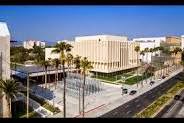
Saturday, May 24, 2014

BOWERS MUSEUM


 We went to Santa Ana to visit the Bowers Museum  on May 14, 2014 during a heat wave with strong winds coming from the East. The museum visit was comfortable with the temperature controlled rooms.  We took a break for lunch at the excellent cafĂ© at the museum.We were aware of some fires in San Diego and on the return drive we saw plumes of smoke behind the hills of Camp Pendleton.  After checking the news reports after returning home they were showing multiple fires across San Diego county as well as at Camp Pendleton.  

Soulful Creatures-animal mummies in ancient Egypt.   The exhibition focused on one of the most fascinating aspects of ancient Egyptian culture and religion-the mummification of animals that included cats, dogs and wild animals.  The exhibit was drawn from the Brooklyn museum collection and also had art related to the ritual use of animal mummies in the natural and supernatural world.
The linen was woven in a patten
The Lure of Chinatown: Painting California’s Chinese Communities. Artists played a pivotal role in documenting the historical changes that occurred in California’s Chinatowns over time as well as in contributing to the perception of these Chinatowns and their residents.


Spirits and Headhunters:  Art of the Pacific Islands.  Spanning the geographic region collectively referred to as Oceania, this comprehensive exhibition highlights masterworks from the three cultural regions of Micronesia, Melanesia, and Polynesia. Particular focus is placed on New Guinea, land of the headhunter, and the rich artistic traditions infused into daily and ritual life. Submerge into a visually stunning world and come face to face with larger-than-life masks, finely crafted feast bowls, objects associated with the secretive Sepik River men’s house, beautiful shell and feather currency, magic figures and tools of the shaman, objects related to seagoing trade routes, gorgeous personal adornments, weapons of warfare and the most precious of human trophies taken in retribution


Tuesday, April 15, 2014

TRAVELING THE SILK ROAD AT L.A. NATURAL HISTORY MUSEUM


We took a DayTripper excursion to  Los Angeles starting with lunch at the Farmer’s Market with numerous outdoor restaurants with cuisines from around the world and interesting groups of small grocers selling fresh fruits and vegetables, meats, poultry and fish, baked goods, ice cream  etc.


The highlight of the day was a visit to L.A.’s Natural History Museum  to see a current exhibit “Traveling the Silk Road: Ancient Pathway to the Modern World”  that featured the spices and ancient Asian instruments along with silk making, ancient scrolls and early astronomy tools. The Silk Road was a network of trade routes established during the Han Dynasty of China that stretched from Damascus to Xian

Museum entrance
Jars were used to ship the trade items


We had time to visit some of the other points of interest in the museum including the dinosaurs and mammals.

Balloon vendor outside the museum
 The rose garden is next to the museum in Exposition Park


SPRING IN BALBOA PARK


 Art Alive has been a tradition for 33 years at the San Diego Art Museum to pair floral interpretations with famous works of art.  In addition the rotunda is decorated with flowers and greenery.
Some designers emphasize shapes and others select a color to accent a painting.


 Spring is the one of the best times to visit the Japanese Friendship Garden with so many trees and shrubs in bloom. The cherry trees were in full bloom and were the highlight of this visit. 

It has been interesting to watch the development of the  canyon below expanding with new plantings, a dry river bed and new structures for future exhibits. 
 There is also an excellent display of ming planters.


Tuesday, April 1, 2014

LOS ANGELES COUNTY ART MUSEUM


We joined a Mingei Museum excursion to Los Angeles beginning with a visit to the Craft and Folk Art Museum with current exhibits of abstract African sculpture, crafts of two Iranian American artists and patterns of decoration using postage stamps.
Then it was on to the LA County Museum of Art for a lunch break at a museum cafĂ© with a salad bar and sandwiches before going on to see a new exhibit of Calder’s abstract mobiles and “stabiles”  which are unmoving forms on three or more legs.  These were impressive large forms in black, white and red.  The other new exhibit was about the on-going career of James Turrell using light and space as a creative medium.


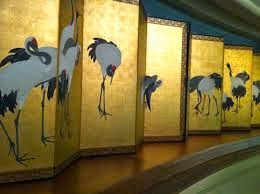
 We had ample time to visit several of the museum buildings starting with the Japanese pavilion with beautiful shoji screens, ceramics paintings and netsukes(miniature sculptures).   Later we went on to the Chinese art exhibit in the Hammer building and then spent the rest of the  time in the Ahmanson building featuring European art as well as south and Southeast Asian art
Netsuke


Friday, March 7, 2014

SANTA MARGARITA RANCH HOUSE AT CAMP PENDLETON


Outside the chapel
Entrance to the house
We joined a DayTripper group to visit the Santa Margarita Ranch House complex at Camp Pendleton which  includes the Ranch House built in 1827, the bunkhouse and a chapel that was originally the winery.  It was the home of Pio Pico, last governor of Mexican California, and succeeding owners Don Juan Forster, the O'Neills, Floods, Baumgartners and, finally, United States Marine Corps Commanding Generals. Historic artifacts at the complex document pre-history through Mission and Rancho periods, the 1942 purchase of Camp Pendleton by the government,  and reflect the WWII and the Korean War.
Exhibits include early ranch equipment, photographs of President Roosevelt's historic visit and  antiques donated by Anthony Quinn during the filming of "Guadalcanal Diary" in 1943.

          
Camp Pendleton is the major West coast base of the U.S, Marine Corps and was named after Major General Joseph Pendleton.
           
Lake O’Neill was constructed across Fallbrook Creek in 1883, was historically used primarily to store water for farm irrigation. Today it is used as a recreation area in Camp Pendleton.
           
The group enjoyed a Mexican lunch at El Callejon restaurant in Vista before going on to Rancho Buena Vista which was given in 1845  by governor Pio Pico to Felipe Subria, a mission Indian.
The land grant was south of the San Luis river and encompassed present day Vista. 
The ranch changed hands many times over the years and was acquired by the City of Vista in 1989. The adobe is the best preserved early California home of the more than 25 ranchos in San Diego County.